


The Story
James is the fifth generation of his family to be based on their farm just outside Wantage. His deep connections to the community and to the local Diocese are part of what motivated him to take on the project that would become Wantage Around Table when his vicar suggested setting up a warm space for tea and coffee just under 3 years ago. After finding out about Oxford Food Hub and speaking to the team there, James decided to go a step further and offer fully cooked meals every Wednesday to anyone in Wantage who needs them. Since then, James has gone on to set up 3 initiatives across Oxford, including Summertown (at St Michael’s Church), central Oxford (the Gatehouse at St Giles), and Botley (St Frideswide’s Church) and is serving around 440 meals a week.
All of James’ community meals are not just about feeding people in need, although this is a key part of its mission. The initiatives also aim to connect people and build community by bringing people together to share a meal each week in an inclusive and welcoming space. People who come to the lunches range in age from 6 months to 101 years old. The regulars, and particularly elderly attendees, say how much they look forward to meeting up with others there and sharing a meal.
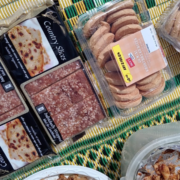
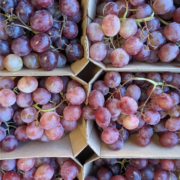
James has been able to get some funding via the government Food and Warmth Grant and donations for some of the initiatives, but the growth of the project he helps to run has been made possible in large part thanks to the help provided by Oxford Food Hub. The immediate enthusiasm of the colleagues at Oxford Food Hub when James first approached them 3 years ago is a big part of what encouraged him to be more ambitious with his plans. The variety and quantity of fresh food he receives means he can cook hundreds of meals from scratch each week and provide for all diets. Although they encourage people to stay and share the meal, they also offer takeaway and, in some cases, home delivery. It’s about catering as best as they can to the needs of the people who use the service.
It’s hard work and requires lots of time and patience to make sure the paperwork is in order, but James is passionate about helping people and raising awareness about the struggles that people face. These difficulties are often hidden from view, and one of the things that volunteers at these projects say they gain is an appreciation of what is going on around them.
“Everybody thought this was an affluent area. So did I. I never thought I’d be doing this two years ago. I never thought I’d be setting up a project like this. And then your eyes actually open and you go, actually, there’s a lot of need right on our doorstep. In all shapes and forms. And it’s not just about needing a meal. It’s about sharing a meal, actually meeting others.”
Unpacking the impact
It’s clear that these community meals that James helps to run have a direct and significant impact on the people who attend each week. The two- and three-course hot meals that they provide address a real need for help in the community. “Last night, a family of eight turned up with young children, and they ate two lots of food. This is kids coming up for seconds, and they’d already had a huge plate full…You think, hold on, something really is going wrong here.”
“It’s just a growing demand now, and I’m seeing that across the whole of Oxfordshire.”
But it’s not just food that people need. They also come to the lunches for company and to connect with others in a safe, friendly and non-judgmental setting. The regulars look forward to seeing each other and sharing a meal. “That’s what it’s about, you know. They all meet up and they sit in their usual places. And it’s great.” “It’s about keeping communities together as well as helping them,” says James.
These projects also help connect people to wider support networks. Volunteers can signpost them to other local services and help them to understand what kinds of support are available.
What James started in Wantage has helped create a whole new network of hot meal services within Oxford. James helped to set up the meal service at St Michael’s in Summertown, for example, just a few months ago, when a community liaison officer for Oxford City Council approached him after hearing about another project he runs in Botley at St Frideswide’s. Now that he’s cooking in Summertown, he makes an extra 50 meals and sends them down to the Gatehouse, a homelessness charity based at St. Giles, helping them to provide hot meals once a week and extending the network further.
“We want it to grow.”
The service in Summertown was set up to provide meals for refugees and other vulnerable people currently living at a local hotel with no cooking facilities, but in the short time it’s been running, it’s already become clear that there are plenty of others in the community who are also in need.
The projects break down barriers for volunteers, too, helping them to understand better how other people in their community live and the struggles they face. “I send two of the volunteers each week to the Gatehouse to see the homeless people and actually realise that this is happening in your local community. These people are there. It’s not just word on the street that there’s people needing [help]. Go and see for yourself. And a few of them have been wary to do it, but afterwards they said, thank you so much for doing that, for pushing me to go there…Unless you put yourself out there to go and see, you don’t realise.”
The impact of James’ work on the community extends beyond mealtimes, helping to create a sense of purpose and resilience in these communities that has led to collective action to find solutions to problems they face. For example, after the council recently told him that the kitchen at St Frideswide’s Church would need to be extended and improved in order to pass the food hygiene inspection and be able to continue to serve meals, the whole community has come together to help raise the money needed for this project, which will cost around £35000.
Learning about waste
While waste reduction is not the main aim of this project, the meals that James provides through the projects he helps to run also raise awareness about waste. Everyone who comes to the lunches is told where the food comes from, and leaflets about Oxford Food Hub are displayed, sparking conversations about food waste and landfill.
An Impact Study, created by Cherwell Collective and Oxford Food Hub in partnership with James Hart
“[Food] waste is harmful for the environment, bad for business, and damaging for society”
Government Food Strategy, 20221 https://www.gov.uk/government/publications/government-food-strategy/government-food-strategy
Oxford Food Hub has been redistributing surplus food for free to hundreds of charities and community groups across Oxfordshire for the last 17 years in an effort not only to reduce the scandalous levels of food waste and the negative impact this is having on the environment and on socio-economic wellbeing, but as a tool to empower and bring communities together.
Today, we are launching Reuse, Redistribute and Reconnect: empowering communities through surplus food. A campaign focused on highlighting the negative environmental and socio-economic impact of food waste, and showcasing the work some of our charity partners are doing to empower local communities through the use of surplus food.
The campaign reflects some of the priorities identified by many of the charities and community groups that responded to a survey carried out by Oxford Food Hub in 2025. The survey sought to elicit our partners’ views on a range of related issues, such as the role surplus food plays in their activities, and the challenges faced by them and the communities they work with.
We also want to start a conversation about what central and local government, as well as businesses and the general public, can do not only to reduce food waste, but to support the hundreds of charities and community groups in Oxfordshire that are working tirelessly to empower residents to become stronger and more resilient during what for many are extremely challenging times.
Some 10 million tonnes of food, worth more than £22 billion2 This figure only includes post-farm gate food waste., is wasted each year in the UK, equivalent to 25% of all food purchased in the country, with households accounting for 60% of this total. This has resulted in at least 16 million tonnes of greenhouse gases being emitted, equivalent to 2% of consumption-related emissions in the UK3 https://www.wrap.ngo/resources/report/uk-food-waste-food-surplus-key-facts.
Meanwhile, almost 14.1 million people in the UK, including 3.8 million children, were living with food insecurity in 2024, according to figures from the Trussell Trust, published at the end of 20254 https://cms.trussell.org.uk/sites/default/files/2025-09/hunger_in_uk_sept25.pdf. While Oxfordshire has low levels of deprivation5 https://data.oxfordshire.gov.uk/deprivation/further-information/, it is deeply unequal. Its wealth masks pockets of deprivation, especially in Oxford, Abingdon and Banbury. Oxford is the UK’s second most unequal city6 https://www.oxford.gov.uk/people-communities/thriving-communities-strategy/4, with some neighbourhoods among the most deprived in the country7https://www.oxford.gov.uk/downloads/file/1251/indices-of-deprivation-2019-oxford-report#:~:text=For%20the%20Employment%20domain%20Oxford,reduced%20since%20the%202015%20IoD.. Around a quarter of children in the city live in poverty, rising to more than 35% in some neighbourhoods8 https://www.oxford.gov.uk/people-communities/thriving-communities-strategy/4. Some 9-14% of all households in the county live with food insecurity9 https://mycouncil.oxford.gov.uk/documents/s68409/Appendix%201.pdf.
The environmental and socio-economic arguments for reducing food waste and for community-based surplus food redistribution are therefore incontrovertible.
Local government budgets are under increasing strain, and less able to intervene effectively, especially in the context of the cost-of-living crisis. Community organisations in Oxfordshire, such as local surplus food groups and mutual-aid networks, have stepped in to fill urgent food-security gaps, as well as addressing other issues, such as the environment and homelessness.
Oxfordshire has a vibrant community sector, connecting people through shared concerns and collective action, creating bonds of trust that are essential when communities face economic and social hardship. And many of these groups use surplus food as a tool to boost community resilience. However, they face increasing challenges, including a lack of funds and volunteers, unsuitable premises, and difficulties in accessing surplus food.
While preventing food waste from being sent to landfill or incinerated is positive for the environment and has socio-economic benefits, it is, however, only a sticking plaster solution to food poverty. Charities cannot provide a long-term and sustainable solution to food poverty. This can only be achieved by governments tackling the structural causes of poverty.
This is why the use of surplus food as a tool to address the climate emergency, and to empower and bring local communities together, is at the heart of what Oxford Food Hub does. Food is more than mere sustenance; it is the metaphorical glue that brings communities together.
Over the next few months, we hope to engage with local councillors and Oxfordshire MPs on how to tackle food waste and promote the consumption of food surplus, as well as the steps they can take to support those charities working with surplus food to engage with and support their local communities.
We will also work with the general public to offer practical solutions to reducing household food waste and to highlight the benefits of using surplus food.
And most importantly, we will use the campaign to showcase the work of some of our partner charities and community groups and the amazing and varied ways they use surplus food. Finally, we hope to offer our partners a range of different activities, such as surplus food pop-ups, to help them more effectively engage with their local communities around the benefits of using surplus food.
We’d like to say a particular thank you to our charity partners, many of which gave up their valuable time to input into this campaign, and especially to Cherwell Collective and Waste2Taste, who collaborated on some of the campaign materials.


